Journal

A new open-access platform for measuring and sharing mTBI data

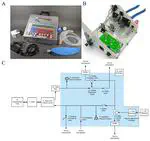
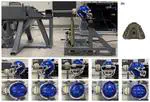
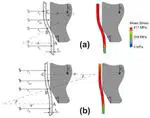
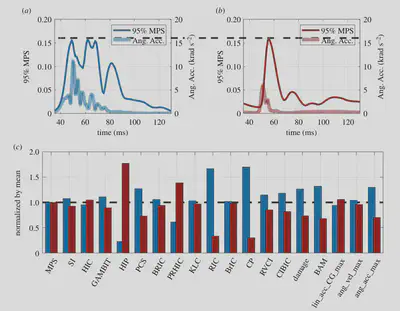
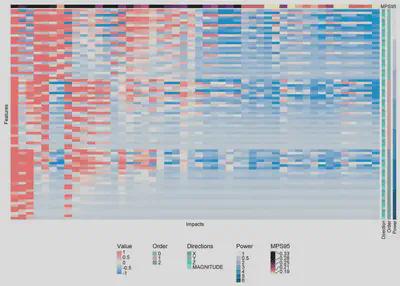
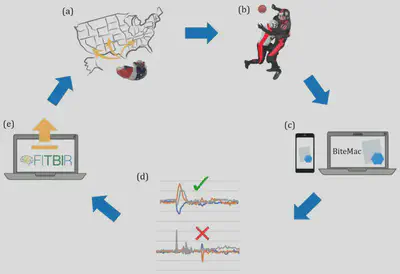
Open-access mTBI data workflow and impact-detection pipeline.

Abstract

1 Vol.:(0123456789)Scientific Reports | (2021) 11:7501 | https://doi.org/10.1038/s41598-021-87085-2 www.nature.com/scientificreports A new open‑access platform for measuring and sharing mTBI data August G. Domel1,12, Samuel J. Raymond1,12*, Chiara Giordano1,12, Yuzhe Liu1, Seyed Abdolmajid Yousefsani1, Michael Fanton2, Nicholas J. Cecchi1, Olga Vovk3, Ileana Pirozzi1, Ali Kight1, Brett Avery4, Athanasia Boumis4, Tyler Fetters3, Simran Jandu4, William M. Mehring4, Sam Monga5,6, Nicole Mouchawar7, India Rangel4, Eli Rice4, Pritha Roy4, Sohrab Sami4, Heer Singh4, Lyndia Wu1,8, Calvin Kuo2,9, Michael Zeineh7, Gerald Grant10,11 & David B. Camarillo1,2,11 Despite numerous research efforts, the precise mechanisms of concussion have yet to be fully uncovered. Clinical studies on high‑risk populations, such as contact sports athletes, have become more common and give insight on the link between impact severity and brain injury risk through the use of wearable sensors and neurological testing. H
A new open-access platform for measuring and sharing mTBI data
Emergency ventilator for COVID-19

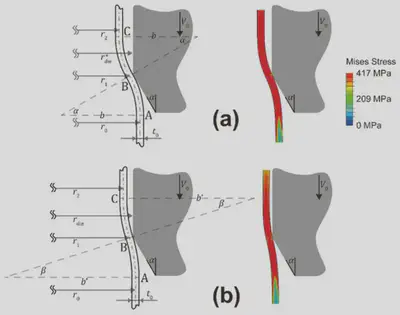
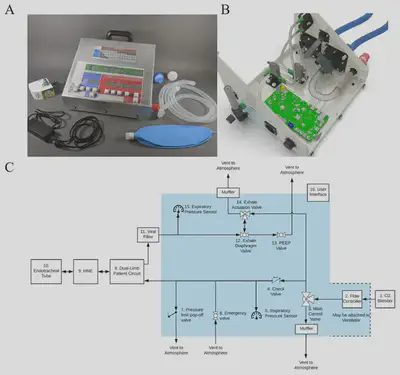
Emergency ventilator prototype and pneumatic design.

Abstract

RESEA RCH ARTICL E A low-cost, highly functional, emergency use ventilator for the COVID-19 crisis Samuel J. Raymond ID 1 *, Sam Baker 2 , Yuzhe Liu 1 , Mauricio J. Bustamante 3 , Brett Ley 4 , Michael J. Horzewski 5 , David B. Camarillo 1,5,6,7☯ , David N. Cornfield 8☯ 1 Department of Bioenginee ring, Stanford University , Stanford, CA, United States of America, 2 Department of Comp arative Medicine, Stanford University , Stanford, CA, United States of America, 3 Department of Electrica l Engineeri ng and Computer Science, UC Berkeley, CA, United States of America, 4 Kaiser Pulmon ology and Critical Care, Fontana, CA, United States of America, 5 O2U Inc., Stanfor d, CA, United States of America, 6 Department of Mechanic al Engineering, Stanford University, Stanfor d, CA, United States of America, 7 Department of Neurosur gery, Stanfor d University, Stanford , CA, United States of America, 8 Department of Pediat rics-Pulm onary Medicine, Stanford University , Stanford, CA, United State

Emergency ventilator for COVID-19
Concussion and the severity of head impacts in mixed martial arts

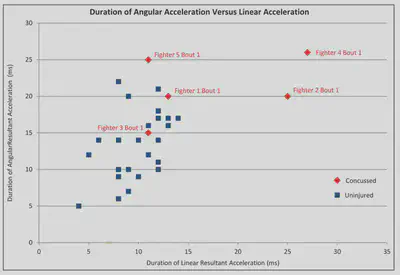
Article overview for mixed martial arts head-impact measurements.

Abstract

Concern about the consequences of head impacts in US football has motivated researchers to investigate and develop instrumentation to measure the severity of these impacts. However, the severity of head impacts in unhelmeted sports is largely unknown as miniaturised sensor technology has only recently made it possible to measure these impacts in vivo. The objective of this study was to measure the linear and angular head accelerations in impacts in mixed martial arts, and correlate these with concussive injuries. Thirteen mixed martial arts fighters were fitted with the Stanford instrumented mouthguard (MiG2.0) participated in this study. The mouthguard recorded linear acceleration and angular velocity in 6 degrees of freedom. Angular acceleration was calculated by differentiation. All events were video recorded, time stamped and reported impacts confirmed. A total of 451 verified head impacts above 10g were recorded during 19 sparring events (n = 298) and 11 competitive events (n = 153). The average resultant linear acceleration was 38.0624.3g while the average resultant angular acceleration was 256761739 rad/s2. The competitive bouts resulted in five concussions being diagnosed by a medical doctor. The average resultant acceleration (of the impact with the highest angular acceleration) in these bouts was 86.7618.7g and 756163438 rad/s2. The average maximum Head Impact Power was 20.6kW in the case of concussion and 7.15kW for the uninjured athletes. In conclusion, the study recorded novel data for sub-concussive and concussive impacts. Events that resulted in a concussion had an average maximum angular acceleration that was 24.7% higher and an average maximum Head Impact Power that was 189% higher than events where there was no injury. The findings are significant in understanding the human tolerance to short-duration, high linear and angular accelerations.

Concussion and the severity of head impacts in mixed martial arts
Dynamic Blood-Brain Barrier Regulation in Mild Traumatic Brain Injury

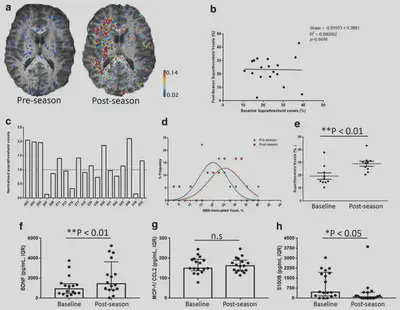
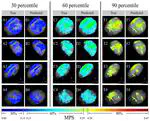
Blood-brain barrier disruption patterns after repetitive head impacts.

Abstract

Whereas the diagnosis of moderate and severe traumatic brain injury (TBI) is readily visible on current medical imaging paradigms (magnetic resonance imaging [MRI] and computed tomography [CT] scanning), a far greater challenge is associated with the diagnosis and subsequent management of mild TBI (mTBI), especially concussion which, by definition, is characterized by a normal CT. To investigate whether the integrity of the blood-brain barrier (BBB) is altered in a high- risk population for concussions, we studied professional mixed martial arts (MMA) fighters and adolescent rugby players. Additionally, we performed the linear regression between the BBB disruption defined by increased gadolinium contrast extravasation on dynamic contrast-enhanced magnetic resonance imaging (DCE-MRI) on MRI and multiple biomechanical parameters indicating the severity of impacts recorded using instrumented mouthguards in professional MMA fighters. MMA fighters were examined pre-fight for a baseline and again within 120 h post-competitive fight, whereas rugby players were examined pre-season and again post-season or post-match in a subset of cases. DCE-MRI, serological analysis of BBB biomarkers, and an analysis of instrumented mouthguard data, was performed. Here, we provide pilot data that demonstrate disruption of the BBB in both professional MMA fighters and rugby players, dependent on the level of exposure. Our data suggest that biomechanical forces in professional MMA and adolescent rugby can lead to BBB disruption. These changes on imaging may serve as a biomarker of exposure of the brain to repetitive subconcussive forces and mTBI.

Dynamic Blood-Brain Barrier Regulation in Mild Traumatic Brain Injury